How to Use AI to Get a Job in 2026: Resume, Job Search & Interview Guide

How to Use AI to Get a Job in 2026: Resume, Job Search & Interview Guide

Finding a job in 2026 is no longer just about sending the same CV to dozens of companies and waiting for a response. Artificial intelligence is changing how people search for jobs, write resumes, prepare for interviews and present their skills to employers.
AI tools can help job seekers discover relevant opportunities, tailor resumes to job descriptions, improve applications and practise interview questions. At the same time, employers are increasingly interested in candidates who can combine AI literacy with human abilities such as communication, creativity, analytical thinking and adaptability.
That means the smartest strategy is not to let AI do everything for you. Instead, use AI as a career assistant while keeping your own experience, personality and judgement at the centre of your application.
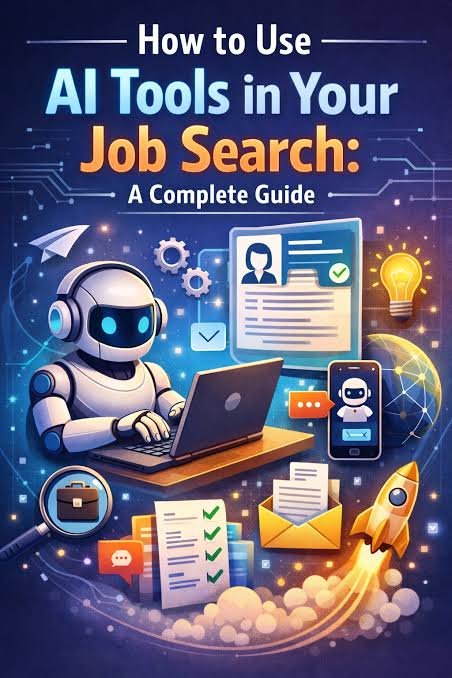
How to Use AI to Get a Job in 2026: Resume, Job Search & Interview Guide

Why AI Matters in Job Searching in 2026

The job market is changing rapidly as companies adopt new technologies and rethink the skills they need.
The World Economic Forum's Future of Jobs research identifies AI and big data, technological literacy, analytical thinking, creative thinking, and adaptability among skills becoming increasingly important.
At the same time, AI is becoming part of the hiring process itself. LinkedIn describes AI as an increasingly important part of how employers screen applications and how candidates need to adapt their job-search strategies.
For job seekers, this creates both an opportunity and a challenge.The opportunity is that AI can save time and improve preparation.
The challenge is that generic, AI-generated applications can make candidates look less authentic.

Why AI Matters in Job Searching in 2026

1. Use AI to Find Better Job Opportunities

One of the first steps in an effective job search is finding the right vacancies.
Instead of applying for every job with a similar title, use AI to help identify positions that match your experience, skills, education and career goals. AI-powered career tools can analyse your background and help surface roles that are more relevant to you.
For example, you can provide AI with:

Your current job title
Your years of experience
Your technical skills
Your soft skills
Your preferred industry
Your location or remote-work preference
Your desired salary range
Your career goals
AI can then help you identify suitable job titles and career paths you may not have considered
This is particularly useful for people changing careers because your previous job title may not accurately represent all of your transferable skills.
Use AI to Find Better Job Opportunities

2. Build an ATS-Friendly Resume

Your resume still needs to communicate your value clearly, but the way you prepare it has changed.

Many organisations use applicant tracking systems and digital screening processes to manage large numbers of applications. A well-structured resume should therefore make your relevant experience and skills easy to identify.

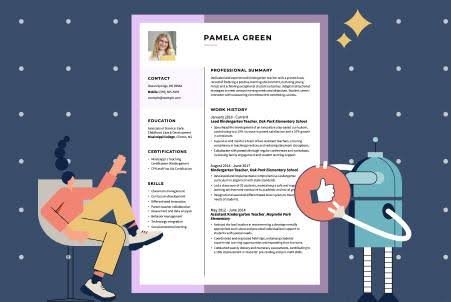
AI can help you tailor your CV to a particular job description by identifying important skills and keywords and suggesting where your existing experience is relevant. Indeed also recommends using AI to tailor resumes while warning against relying on generic applications.

A good AI-assisted resume workflow looks like this:

Job description → identify requirements → compare with your experience → tailor relevant sections → review manually → submit

The important part is the final review.

Never add a skill simply because an AI tool recommends it. Your resume should accurately represent what you can actually do.


Build an ATS-Friendly Resume

3. Use an AI Resume Builder to Save Time

Creating a strong resume from a blank page can be difficult, especially for students, recent graduates and people changing careers.

An AI resume builder can help organise your information into professional sections such as:

Professional Summary
Work Experience
Education
Skills
Projects
Certifications
Achievements

AI can also help turn weak duty-based statements into clearer achievement-focused bullet points.

For example:

Before:
“Responsible for managing social media accounts.”

Better:
“Managed social media content across multiple platforms and improved audience engagement through consistent content planning and performance tracking.”

The second version communicates the work more clearly. However, any result or number included in your CV should be genuine and verifiable.

For EnglishCareerByte readers, an AI Resume Generator can make this process significantly easier by providing a structured starting point instead of forcing job seekers to build everything manually.

4. Tailor Your Resume for Every Important Job

One of the biggest mistakes job seekers make is using exactly the same CV for every vacancy.

Imagine applying for three different positions:

Your experience may be relevant to all three roles, but the most important parts of your background will be different.

For a digital marketing role, you may want to emphasise:

  • Social media marketing
  • Campaign management
  • Analytics
  • Lead generation
  • Advertising

For a content writing position, you may highlight:

  • Article writing
  • Research
  • Editing
  • SEO content
  • Storytelling

For an SEO position, relevant skills could include:

  • Keyword research
  • On-page SEO
  • Technical SEO
  • Google Search Console
  • Content optimisation

AI can help you compare the vacancy with your existing CV and identify which genuine experiences deserve more prominence.

5. Write Better Job Applications Without Losing Your Voice

AI can help draft cover letters, application answers and recruiter messages.

But there is an important rule:

Do not send the first AI-generated version.

A generic AI application often sounds polished but forgettable.

Instead, use AI for the first draft and then personalise it with:

  • Your actual experience
  • A specific achievement
  • Your reason for wanting the role
  • Knowledge of the company
  • Your natural writing style

Employers still value authenticity, and career guidance increasingly stresses the importance of maintaining a human touch when using generative AI in job applications.

The goal is not to sound like AI.

The goal is to communicate your value more effectively.

Use AI for LinkedIn Optimisation

6. Use AI for LinkedIn Optimisation

Your CV is not the only part of your professional profile that matters.

Your LinkedIn profile can also benefit from AI-assisted optimisation.

You can use AI to improve your:

  • LinkedIn headline
  • About section
  • Skills section
  • Professional summary
  • Achievement descriptions
  • Job descriptions

For example, instead of writing:

“I work in marketing and have experience with websites.”

You could create a clearer positioning statement such as:

“Digital marketing professional specialising in SEO, content strategy and website growth, with hands-on experience developing and optimising online platforms.”

The final wording should still reflect your genuine background.

LinkedIn itself highlights generative AI as useful for job-search tasks including resume writing, profile optimisation and interview preparation.

7. Prepare for AI-Assisted Interviews

Job interviews are another area where AI can be useful.

You can use an AI tool to simulate a job interview based on the position you are applying for.

Ask it to generate:

  • Common interview questions
  • Technical questions
  • Behavioural questions
  • Company-specific questions
  • Follow-up questions
  • Difficult interview scenarios

Then practise answering each question aloud.

For example, if you are applying for a marketing position, you might practise questions such as:

“Tell me about a marketing campaign you worked on.”

“How do you measure campaign performance?”

“What would you do if a campaign failed to generate leads?”

“Which AI tools do you use in your marketing workflow?”

AI can also act as a practice interviewer and provide feedback on the clarity and structure of your responses. LinkedIn specifically identifies interview preparation as one area where generative AI can support job seekers.

8. Be Ready to Talk About AI in Your Interview

In 2026, some candidates may be asked directly about their experience with artificial intelligence.

You do not need to claim that you are an AI expert.

Instead, explain honestly how you use technology to improve your work.

For example:

“I use AI tools to speed up research and brainstorming, but I review the output carefully and make the final decisions myself.”

This answer demonstrates both technical awareness and judgement.

Recent hiring guidance also indicates that employers increasingly value practical AI ability rather than simply listing AI-related tools on a CV.

9. Learn the AI Skills Employers Actually Want

Knowing the name of an AI tool is not the same as having a valuable AI skill.

Job seekers should focus on learning how to use AI to solve real problems.

Depending on your career, useful skills may include:

AI literacy – understanding what AI can and cannot do.

Prompting – giving AI clear instructions and useful context.

Data analysis – using AI to interpret and organise information.

Automation – using technology to reduce repetitive work.

Content optimisation – combining AI assistance with human editing and strategy.

Problem-solving – applying AI to real workplace challenges.

The World Economic Forum identifies AI and big data, technological literacy, analytical thinking and creative thinking among the skills expected to increase in importance.

10. Do Not Put Fake AI Skills on Your Resume

This is one of the most important rules of AI-assisted job searching.

Never claim experience you do not have.

If you have never worked with a particular AI platform, do not describe yourself as an expert.

If you are currently learning a tool, you can say:

“Currently learning…”

or

“Familiar with…”

rather than claiming advanced expertise.

Your CV may help you get an interview, but your real skills determine whether you can succeed once you get there.

AI can help you present your experience better.

It cannot replace the experience itself.

11. Combine AI Skills With Human Skills

The future of work is not simply about becoming better at using AI.

Human skills remain extremely important.

The World Economic Forum highlights qualities such as analytical thinking, creative thinking, resilience, flexibility, leadership, curiosity and lifelong learning alongside technology-related skills.

This creates a powerful combination:

AI skills + communication + critical thinking + creativity + adaptability

A candidate who knows how to use AI but cannot communicate clearly may struggle.

A candidate with strong communication skills but no willingness to understand emerging technology may also fall behind.

The strongest professionals are learning to combine both.

happy to use ai

12. A Simple AI Job Search Strategy for 2026

Instead of applying randomly, create a repeatable system.

Step 1: Define your target

Choose the job title, industry and type of company you want.

Step 2: Analyse job descriptions

Study multiple vacancies and identify recurring skills, responsibilities and keywords.

Step 3: Improve your CV

Use an AI resume tool to organise and tailor your genuine experience.

Step 4: Optimise LinkedIn

Make sure your headline, About section and skills support the same professional direction.

Step 5: Personalise applications

Use AI to help with drafts, but add your own experience and voice.

Step 6: Prepare for interviews

Practise realistic questions and use AI as a mock interviewer.

Step 7: Build relevant skills

Learn the technical and human skills that appear repeatedly in your target vacancies.

Step 8: Track your results

Keep a simple record of applications, interviews, responses and improvements.

This turns job searching from a random activity into a measurable process.

Is It Safe to Use AI for Your Resume?

Yes, AI can be useful for resume writing and job applications, provided you use it responsibly.

Do not allow AI to invent:

  • Employment history
  • Qualifications
  • Job titles
  • Certifications
  • Achievements
  • Technical skills
  • Performance statistics

Also review the final document for errors and irrelevant information.

Your resume should be an accurate representation of you, not a collection of impressive-sounding AI-generated claims.

Will AI Replace Traditional Job Searching?

Not completely.

AI is changing the process, but job seekers still need to understand their career goals, communicate their value, build relationships and demonstrate real skills.

In fact, as AI-generated applications become easier to produce, authenticity and proof of ability may become even more important.

The advantage will belong to people who use AI strategically rather than mechanically.

Final Thoughts: Use AI as Your Career Assistant

The modern job search is becoming more competitive, but AI can make it more manageable.

You can use AI to discover opportunities, analyse job descriptions, tailor your CV, improve applications, optimise LinkedIn and practise interviews.

But remember one principle:

Do not let AI replace your judgement. Let it improve your process.

A strong 2026 job application is not simply an AI-generated resume. It is a combination of relevant skills, genuine experience, clear communication, smart AI use and continuous learning.

The candidates who learn to combine technology with human strengths will be better prepared for the changing world of work.

Frequently Asked Questions

Can AI write my resume?
Yes. AI can help structure, edit and tailor a resume, but you should verify every detail and make sure the final version accurately reflects your real experience.

Can AI help me pass an ATS?
AI can help identify relevant keywords and improve resume structure, but there is no guarantee that a particular application will pass an employer’s screening system.

Should I mention AI skills on my CV?
Yes, when they are relevant to the position and you genuinely have those skills. Focus on how you used AI rather than simply listing popular tools.

Can I use ChatGPT for interview preparation?
Yes. You can use it to generate role-specific questions, practise answers and simulate interview scenarios.

What are the best skills to learn in 2026?
AI and data-related capabilities are increasingly important, but analytical thinking, creativity, adaptability, technological literacy and continuous learning also remain highly valuable.

Is AI replacing human workers?
AI is changing many tasks and occupations, but the impact varies by role. Current workforce research points toward significant job transformation as well as the creation of new opportunities, making upskilling and adaptability increasingly important.

Leave a Reply

Your email address will not be published. Required fields are marked *